
We are living in an era where technology is advancing at an unprecedented speed, reshaping our world in ways that seemed like science fiction just a few decades ago. From artificial intelligence (AI) that can understand and create, to green energy innovations combating climate change, and space technologies opening new frontiers — the pace of change is astonishing.
In this post, we’ll explore some of the most groundbreaking technologies shaping our future, how fast these innovations are unfolding, and what it means for societies across the globe.

1. Artificial Intelligence: The New Brainpower of the Digital Age
The Explosion of AI Capabilities
Artificial Intelligence has moved from simple automation and data analysis to creating art, writing, coding, diagnosing diseases, and driving cars. The emergence of large language models like GPT-4, capable of understanding and generating human-like text, marks a significant leap.
- Rapid Progress: Just in the past five years, AI models have grown from handling narrow tasks to multitasking across domains — text, images, audio, and video.
- Practical Impacts: AI assistants help with customer service, medical diagnostics, legal document review, and even composing music.
- Economic Influence: McKinsey estimates AI could add $13 trillion to the global economy by 2030.
How Fast Is AI Advancing?
AI’s advancement pace is exponential. Research papers, computational power, and training data are growing rapidly. A model that took months to train five years ago can now be trained in weeks or days with more sophisticated architectures.
The rise of AI democratization means businesses worldwide can access powerful AI tools, accelerating innovation cycles.
Challenges and Ethical Considerations
- Bias and fairness in AI decisions
- Job displacement concerns and workforce adaptation
- Privacy and surveillance risks
- The debate around AI regulation and safety
Despite challenges, AI’s potential to enhance productivity and solve complex problems remains extraordinary.
2. Green Energy Revolution: Powering a Sustainable Future
The Urgency of Climate Action
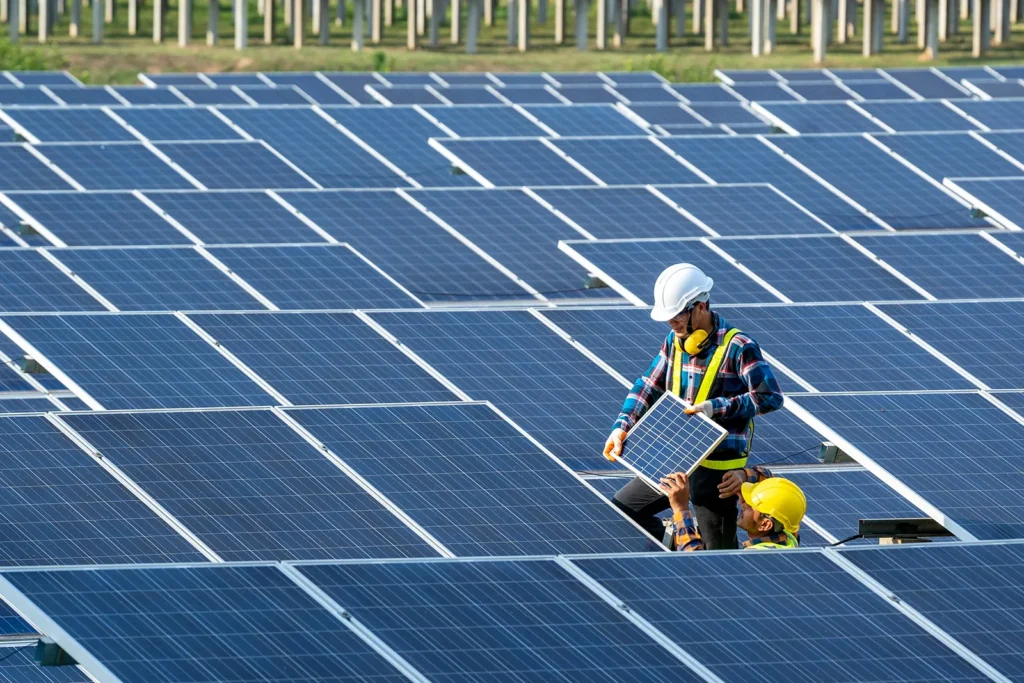
With climate change accelerating, clean energy technology is critical. The world is witnessing remarkable advances in solar, wind, battery storage, and emerging technologies like green hydrogen.
- Solar Power: Costs have plummeted by over 80% in the last decade, making solar the cheapest source of electricity in many regions.
- Wind Energy: Offshore wind farms are expanding rapidly, harnessing strong ocean winds to generate large-scale power.
- Energy Storage: Breakthroughs in lithium-ion and solid-state batteries address intermittency challenges.
- Green Hydrogen: Using renewable electricity to produce hydrogen fuel offers a zero-emission alternative for heavy industries and transport.
Speed of Adoption
The International Energy Agency (IEA) reports that renewables accounted for nearly 90% of new power capacity added globally in 2023. Electric vehicle (EV) sales are soaring, with some countries targeting 100% EV adoption by 2030.
Governments and corporations are setting aggressive net-zero targets, accelerating investments and innovation cycles.
The Road Ahead
- Scaling grid infrastructure and smart grids
- Cost reductions for green hydrogen production
- Circular economy approaches for battery recycling
- Policy frameworks to incentivize clean energy deployment
3. Space Technology: Humanity’s Final Frontier
The New Space Race
Space technology is booming like never before, thanks to private companies and national agencies pushing boundaries.
- Reusable Rockets: SpaceX’s Falcon 9 revolutionized launch costs by enabling rocket reuse, making space more accessible.
- Satellite Mega-Constellations: Projects like Starlink aim to provide global internet coverage, connecting remote areas.
- Moon and Mars Missions: NASA’s Artemis program plans to return humans to the Moon, with Mars colonization ambitions on the horizon.
- Space Tourism: Companies like Blue Origin and Virgin Galactic are beginning to offer suborbital spaceflights for private citizens.
Pace of Advancement
What once took decades to plan and execute can now happen in a few years due to reusable technology and international collaboration. The cost of launching payloads has dropped by over 60% in the last decade.
The miniaturization of satellites and advances in propulsion are enabling new types of missions at lower costs.
Implications
- Enhanced Earth observation and climate monitoring
- Scientific discoveries and potential resource mining in space
- Inspiration for STEM education and international cooperation
4. Biotechnology: Redefining Health and Life Sciences
The Genomic Revolution
The ability to read and edit DNA has transformed medicine and agriculture.
- CRISPR Gene Editing: Enables precise modification of genes, offering cures for genetic diseases and improved crops.
- mRNA Vaccines: COVID-19 vaccines proved how quickly new vaccine platforms can be developed and deployed.
- Personalized Medicine: Tailoring treatments to individual genetic profiles is becoming more feasible.
Speed of Breakthroughs
The Human Genome Project took 13 years to complete; today, sequencing a genome takes a few hours. Clinical trials for mRNA vaccines happened within a year, demonstrating an unprecedented acceleration.
Biotech startups are innovating rapidly, blending AI and biology for drug discovery.
Ethical and Safety Issues
- Gene editing ethics and regulations
- Biosecurity risks
- Access and affordability of advanced therapies

5. Quantum Computing: Unlocking New Computational Power
What Is Quantum Computing?
Quantum computers use quantum bits (qubits) to perform complex calculations beyond classical computers’ reach.
- Potential Applications: Drug discovery, cryptography, optimization problems, climate modeling.
- Current State: Still experimental but making steady progress with prototypes from IBM, Google, and startups.
Speed of Progress
While widespread practical quantum computing may still be years away, recent breakthroughs in qubit stability and error correction have accelerated timelines.
Governments and corporations are investing billions to advance quantum research.
6. Robotics and Automation: The New Workforce
Revolutionizing Industries
Robots now operate in warehouses, hospitals, factories, and even homes.
- Autonomous Vehicles: Self-driving cars and drones are nearing commercial viability.
- Cobots: Collaborative robots work alongside humans to boost efficiency.
- Service Robots: Robots providing delivery, cleaning, and healthcare assistance are emerging.
How Fast?
The global robotics market is expected to double in size by 2030, driven by AI integration and hardware improvements.

7. Internet of Things (IoT) and 5G Connectivity
A Connected World
IoT devices are embedding connectivity into everyday objects — homes, cities, industries — creating smart ecosystems.
- 5G Networks: Deliver ultra-fast, low-latency communication, enabling real-time applications.
- Smart Cities: Using sensors to optimize traffic, energy use, and public safety.
- Healthcare IoT: Remote monitoring and telemedicine improving patient care.
Adoption Rate
5G rollout is rapid, with billions of devices expected to be connected by 2028, transforming data collection and automation.
What Does This All Mean for Us?
The accelerating pace of technological breakthroughs offers unprecedented opportunities but also challenges:
- Economic Shifts: New industries emerge while others disrupt or vanish.
- Job Transformation: Skills demand changes rapidly — lifelong learning becomes essential.
- Privacy & Security: Greater connectivity demands robust cybersecurity measures.
- Ethical Considerations: Technology must align with societal values and equity.
The Speed of Change: Why It Feels Faster Than Ever
- Global Collaboration: Ideas and research share instantly worldwide.
- Moore’s Law and Beyond: Computational power grows exponentially.
- Massive Data: AI and analytics harness vast datasets, accelerating discovery.
- Investment and Interest: Billions flow into tech innovation from public and private sectors.
What to Watch Next
- Advances in brain-computer interfaces
- Fusion energy breakthroughs
- Decentralized finance and blockchain innovations
- Advanced materials like graphene and nanotechnology

Conclusion
The world is rapidly transforming through groundbreaking technologies that hold the promise to solve some of humanity’s greatest challenges — from climate change and healthcare to connectivity and exploration. But navigating this fast-moving landscape requires wisdom, responsibility, and a commitment to inclusivity.
As technology reshapes every facet of life, staying informed and adaptable will be key to thriving in this new era.