
How Smart Sensors and AI Are Saving the World’s Pollinators One Rooftop at a Time

🟡 Introduction
In the dense skylines of New York City, Paris, Tokyo, and London, a quiet revolution is buzzing—quite literally—just above our heads. Amid the steel, concrete, and glass, small wooden boxes hum with life. These are urban beehives, and they are no longer quaint symbols of eco-conscious living. They’ve gone digital.
Welcome to the age of the Smart Hive, where bees are monitored by AI, managed through data analytics, and connected via the Internet of Things (IoT). This technological advancement is not a futuristic dream—it’s already happening across rooftops worldwide.
Urban beekeeping has surged over the past decade due to a mix of environmental urgency and innovative urban sustainability efforts. Bees, responsible for pollinating nearly 75% of the food crops we consume, are vanishing due to pesticides, habitat loss, and climate change. In response, city dwellers, scientists, and startups have taken to the skies—rooftops, that is—with a bold new plan: digitize the beehive.
These smart beehives are not just passive boxes for bees. Equipped with temperature sensors, humidity monitors, vibration detectors, and even audio analysis tools, they generate continuous streams of data that help beekeepers remotely track hive health, detect early signs of colony collapse, and optimize pollination activity.
This isn’t just about saving bees—it’s about the future of urban life, agriculture, and food security. As the world moves toward smarter cities, this convergence of ecology and technology shows how we can harness innovation to solve pressing global issues.
Let’s take a deep dive into this fascinating new frontier—where nature meets silicon, and rooftops become laboratories for hope.

🌆 Urban Beekeeping: A Global Phenomenon
Urban beekeeping, once a niche hobby embraced by environmentalists and hobbyists, has evolved into a mainstream movement. Cities across the globe are now embracing bees as essential urban residents, and not just for the honey.
📍 A Rooftop Revolution
Walk through almost any major city today, and you might be surprised to find beehives atop art museums, hotels, office buildings, and even hospitals. Urban hives are flourishing in places like:
- Paris, where beehives have adorned the rooftops of Notre-Dame and the Opera House since the 1980s.
- London, where over 5,000 hives are registered across the city.
- New York City, which legalized beekeeping in 2010 and now hosts hundreds of hives from the Bronx to Brooklyn.
- Berlin, home to the “Berlin Bees” movement which combines beekeeping, education, and sustainability.
The reasons are both environmental and philosophical. Cities, despite their chaos, can offer bees an abundance of floral diversity, fewer pesticides, and extended flowering seasons due to the urban heat island effect.
But this growth has created challenges, too. Hive density has increased dramatically in some urban centers, leading to competition among colonies and reduced forage availability. Monitoring and managing this new urban ecology demands more than traditional beekeeping methods.
🧑🌾 From Hobby to High-Tech Science
The modern urban beekeeper isn’t just a hobbyist anymore. They’re increasingly data-savvy, collaborating with researchers, app developers, and city planners. Beekeeping associations now offer digital tools, online courses, and hive management apps. Meanwhile, environmental organizations and smart city projects are integrating bee populations into larger urban sustainability metrics.
With growing concern over pollinator health and biodiversity, urban beekeeping has also become a gateway to environmental activism. Schools, community groups, and corporate sustainability programs are adopting hives as a way to raise awareness—and now, with smart tech, they’re also contributing valuable data to science.
🧠 Tech Meets Nature: Smart Hives Explained
🕹️ What Is a Smart Hive?
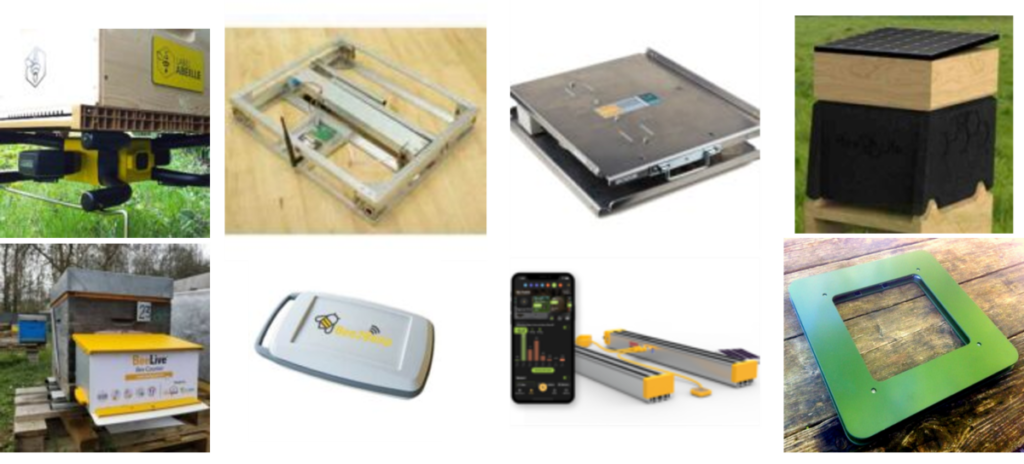
A Smart Hive is a technologically-enhanced beehive outfitted with electronic sensors and connected systems designed to monitor and optimize bee health and hive conditions. Think of it as a Fitbit for bees—or a beehive with Wi-Fi.
Smart hives typically include:
- Temperature and humidity sensors
Bees regulate the internal climate of the hive meticulously. Deviations in temperature or humidity can signal problems, such as disease, pests, or swarming behavior. - Acoustic sensors (microphones)
Bees communicate via vibration and buzzing frequencies. By recording and analyzing these sounds, AI models can detect signs of stress, queen absence, or health issues. - Weight sensors
Monitoring the weight of a hive helps gauge nectar flow, honey production, and even population changes. - Cameras and movement sensors
Some advanced hives have mini cameras or optical sensors that count bee entries and exits, tracking colony activity levels. - GPS and environmental sensors
By mapping hive locations and surrounding environmental data, researchers can link bee behavior to air pollution, temperature changes, and habitat health.
All of this data is transmitted via Bluetooth or cellular networks to cloud servers, where it can be accessed and analyzed through dashboards, apps, or APIs.
📡 Automation in Hive Management
Smart hives are changing how beekeepers manage their colonies. Rather than checking hives manually every few days—which can disturb bees—keepers can now receive real-time alerts if a hive is overheating, underpopulated, or showing signs of disease.
Some systems are even beginning to incorporate automation, such as temperature regulation, pest control deployment, or robotic bee feeders—all triggered by algorithms.
Startups like ApisProtect, BeeHero, and Pollenity have led the charge, offering cloud-based hive monitoring tools to commercial and hobbyist beekeepers alike. Their tools are now used in thousands of hives across North America, Europe, and Asia.
📊 The Digital Buzz: IoT, AI & Big Data
🌐 The Role of IoT in Beekeeping
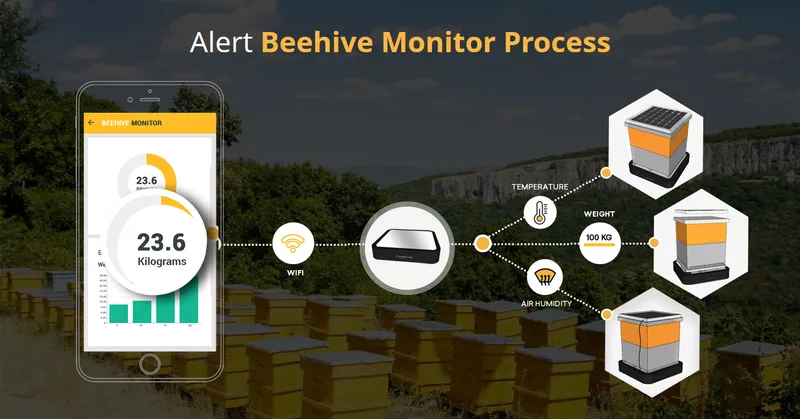
The Internet of Things (IoT) allows everyday objects to be embedded with sensors and connected to the internet. In smart beekeeping, IoT plays a central role by:
- Connecting hives in real-time to beekeeper dashboards.
- Feeding environmental data into larger agricultural management systems.
- Allowing automated alerts and intervention before problems escalate.
Each hive becomes a node in a global network—part of a real-time biological sensing grid. This makes urban bees not just pollinators, but also data gatherers for everything from climate trends to air quality.
🤖 Using AI to Understand Bees
AI (Artificial Intelligence) tools are being trained to “understand” bee behavior. By analyzing vast datasets from smart hives, machine learning algorithms can:
- Predict hive collapses days or weeks in advance.
- Detect Varroa mite infestations through audio patterns.
- Identify when a queen is lost based on behavioral anomalies.
- Forecast swarming activity, which allows for timely intervention.
Researchers at the University of Illinois and MIT have developed AI models that can interpret bee buzz frequencies to diagnose specific diseases. Other teams are working on facial recognition for bees—yes, you read that right—to identify individual pollinators as they enter and exit hives.
🧬 Big Data and Pollinator Research
With thousands of smart hives deployed worldwide, the amount of bee-related data is staggering. This “bee big data” is now informing:
- Urban biodiversity maps.
- Climate change models.
- Precision agriculture practices.
- Policy recommendations on pesticide use and green space planning.
One notable example is the HiveTracks Global Hive Network, a citizen science initiative where beekeepers upload hive data that contributes to global research on pollinator health.

🌍 Cities Leading the Swarm: Case Studies
🗽 New York City
Home to over 300 registered hives, NYC is a surprising hotspot for smart beekeeping. The Bee Conservancy, based in Harlem, installs tech-enabled hives in community gardens, schools, and rooftops. They use hive data to educate the public and partner with scientists to study urban pollination.
🇫🇷 Paris
Paris has been a pioneer in urban beekeeping since the 1980s. Today, smart hives can be found on the Opera Garnier rooftop and the École Militaire. The French government has supported digital beehive initiatives as part of broader biodiversity tracking efforts.
🇮🇱 Tel Aviv
Israeli startup BeeHero uses IoT sensors in over 100,000 commercial hives across the U.S. and Israel. Their data is used not only by beekeepers but also by farmers, who use pollination analytics to optimize crop yields.
🇯🇵 Tokyo
Tokyo has embraced vertical farming and urban ecology with zeal. Smart hives atop buildings in the Shibuya and Ginza districts serve as both environmental monitors and tourist attractions.
🧠 Why This Matters: Ecological and Economic Impact
🌱 Ecological Value
Bees are keystone species. Their health reflects the state of the ecosystem. With smart hives, cities can:
- Monitor biodiversity changes in real-time.
- Detect environmental stressors.
- Create data-driven green spaces that support pollinators.
Smart hives can even detect the presence of pollutants or toxins in the environment through the analysis of wax and pollen samples.
💰 Economic Impact
The pollination industry is worth over $200 billion globally, and smart hives offer significant returns:
- Reduced colony losses, saving beekeepers thousands of dollars per hive.
- Improved crop yields through targeted pollination strategies.
- Less labor-intensive management, increasing efficiency for commercial operations.
Furthermore, smart hives serve as educational tools, tourism draws, and PR wins for corporations eager to boost their sustainability image.

🛸 The Future of Bees in the Smart City
The smart hive is not the end of the story—it’s the beginning. In the coming years, we can expect:
- Drone-assisted beekeeping, where autonomous drones help track and manage wild colonies.
- Blockchain-backed honey, allowing full traceability from hive to shelf.
- Genetic monitoring, using DNA analysis to detect and prevent disease outbreaks.
- Augmented reality hive interfaces, letting users “see inside” their hive in real-time.
Most importantly, the rise of smart hives is part of a broader movement: reconnecting humanity with the natural systems it depends on. In a world of rapid urbanization and digital isolation, the humble bee—wired and buzzing—may be our most unexpected ally.
🔚 Conclusion
The fusion of technology and ecology in urban beekeeping is more than a novelty—it’s a necessity. As pollinator populations face existential threats, smart hives offer a hopeful path forward. They transform cities into living laboratories, where every bee is a data point, and every rooftop a frontier of innovation.
From rooftop gardens in Tokyo to community centers in New York, these tiny creatures—monitored by sensors and protected by science—remind us that survival in the 21st century will depend on unlikely partnerships. Bees and bytes. Nature and code. Instinct and intelligence.
This is not just a story about bees. It’s a story about the kind of world we want to build. And it’s already buzzing into existence, one smart hive at a time.